…….Present Country Experiences at ECOWAS Second Parliamentary Seminar
By Janet Salihu
Nigeria and The Gambia have called for stronger regional cooperation, climate-resilient agriculture and sustainable livelihood programmes as part of efforts to address internal displacement, farmer-herder conflicts and food insecurity across West Africa.
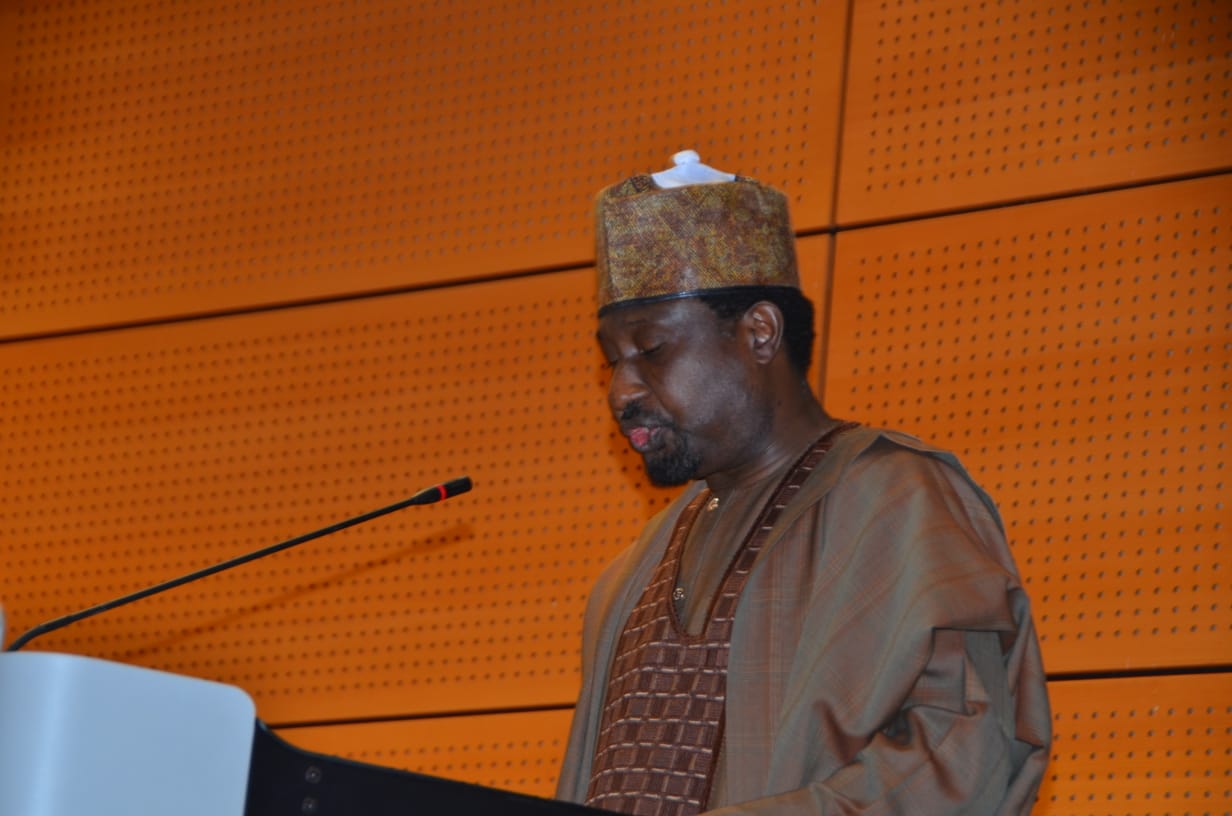
The call formed part of country presentations at the Second Parliamentary Seminar of the ECOWAS Parliament in Accra, Ghana, where Nigeria presented its experience in addressing internal displacement and farmer-herder conflicts, while The Gambia highlighted lessons from the implementation of the Programme to Strengthen Resilience to Food and Nutrition Insecurity in the Sahel and West Africa, P2P2RS Phase II.
Presenting Nigeria’s report on behalf of the country, Deputy President of the Senate, Senator Barau I. Jibrin, said the scale of displacement and conflicts in the country required an integrated response combining security, development, climate adaptation, livelihoods and effective governance.
The report noted that Nigeria’s displacement crisis is driven by several overlapping factors, including armed conflict, communal violence, farmer-herder clashes, banditry, terrorism, flooding and other disasters.
According to the International Organization for Migration, IOM, Nigeria’s North-East had more than 2.2 million internally displaced persons and over two million returnees, while more than 1.3 million internally displaced persons were recorded across the North-Central and North-West in early 2025.
The Nigerian presentation identified competition over land and water, crop destruction, encroachment on livestock routes, cattle rustling, changing migration patterns, environmental degradation and climate variability among factors contributing to farmer-herder tensions.
It, however, stressed that such conflicts should not be viewed simply as disputes between farmers and herders, noting that they increasingly intersect with communal disputes, criminality, insecurity, climate pressures and weaknesses in local conflict-resolution systems.
The report highlighted Nigeria’s shift from emergency relief towards durable solutions for internally displaced persons, including safe and voluntary return, local integration, relocation, restoration of livelihoods and access to housing, land, education, healthcare and other essential services.

It also identified early-warning systems, improved land and natural-resource governance, community dialogue, access to justice and modern livestock production as key strategies for reducing recurring conflicts.
The Federal Government’s livestock development strategy was cited as part of efforts to modernise livestock production through ranching, improved pasture, water supply, veterinary services, breeding, processing and market development.
The Federal Ministry of Livestock Development has also linked improved water management and irrigated fodder production with efforts to reduce competition over natural resources and promote peaceful coexistence between farming and pastoral communities.
The report further called for stronger investment in livelihoods, particularly for women and young people, arguing that economic empowerment, agricultural value chains, vocational training and access to finance could strengthen resilience among communities affected by conflict and displacement.
For The Gambia, the country presentation focused on its experience with P2P2RS Phase II, a $17.75 million resilience project supported by a $16.5 million grant from the African Development Fund and a $1.25 million counterpart contribution from the Gambian government.
The project targets vulnerable communities across 19 districts in four agricultural regions, with at least 67,200 people expected to benefit from interventions covering agriculture, livestock, fisheries, climate adaptation and rural livelihoods.
The Gambian delegation reported that the programme had supported farmers with mechanised ploughing, improved seeds, fertiliser, agrochemicals and technical assistance, while also promoting climate-smart agriculture and greater participation of women and young people.
Among the reported achievements were the distribution of 300 small ruminants, 125 post-harvest equipment units, 10,000 cockerels, certified rice, maize and findi seeds, and fertiliser to smallholder farmers.
The programme also supported the ploughing of about 9,800 hectares of farmland and the planting of 22,000 seedlings as part of afforestation and forest restoration efforts.
The Gambia further reported interventions aimed at reducing farmer-herder tensions through sensitisation campaigns and protection of cattle tracks and grazing areas.
However, the country identified inadequate funding, implementation delays, insufficient resources for environmental and social safeguards and staff capacity-building gaps among challenges affecting the programme.
Drawing lessons from its experience, The Gambia urged ECOWAS member states to place farmers and vulnerable communities at the centre of resilience programmes and strengthen regional knowledge-sharing on climate-smart agriculture, irrigation, mechanisation, soil restoration, seed systems and early-warning mechanisms.
Both country presentations emphasised the need for parliamentarians to play a stronger role in securing adequate budgetary allocations, strengthening oversight and ensuring that policies designed to address food insecurity, displacement and climate-related vulnerabilities are effectively implemented.
They also stressed that climate action should be treated as a peace and security concern, given its implications for land, water, food production, livelihoods and population movement across the region.
The presentations underscored the importance of moving beyond emergency responses towards long-term investments that enable communities to rebuild livelihoods, strengthen food systems and adapt to changing environmental conditions.
The Second Parliamentary Seminar of the ECOWAS Parliament, holding in Accra from September 21 to 23, 2026, brings together parliamentarians and stakeholders to examine regional challenges and strengthen legislative cooperation on issues affecting peace, security, development and resilience in West Africa.