Jane Salihu
The Federal Government has stepped up efforts to translate vocational skills into sustainable businesses and employment opportunities, with 7,000 beneficiaries in Lagos State expected to receive business starter kits under its Technical and Vocational Education and Training (TVET) initiative.
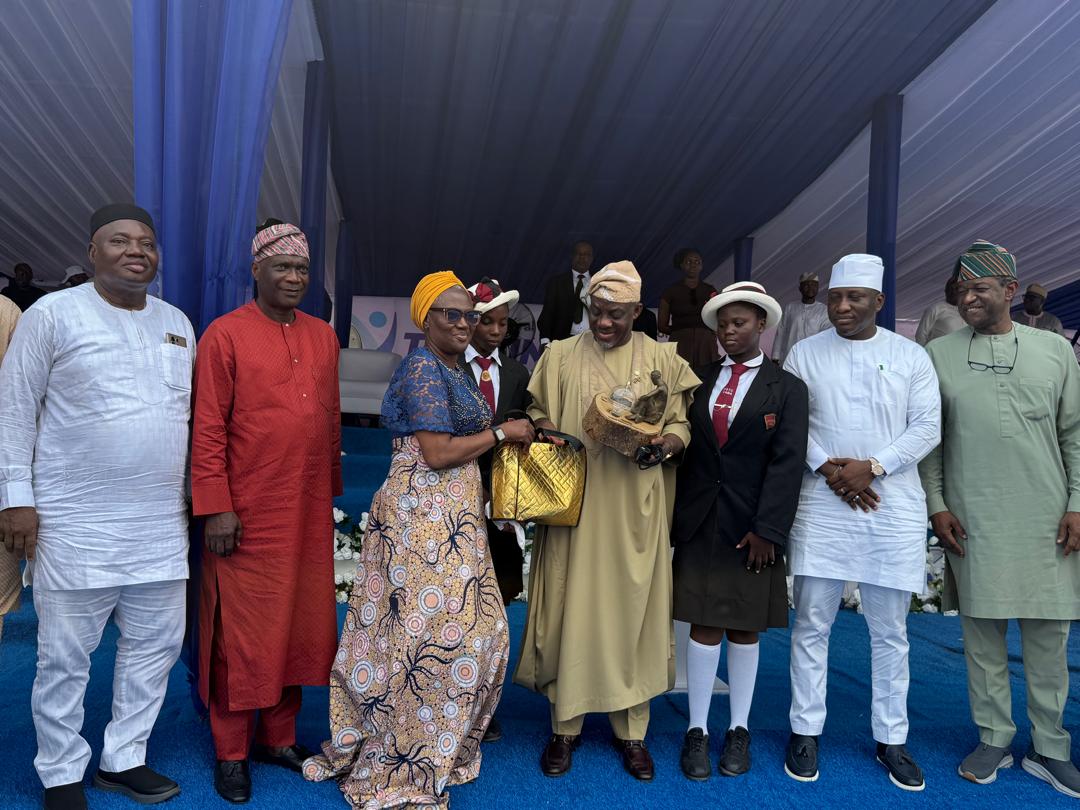
The Minister of Education, Dr Maruf Tunji Alausa, disclosed this on Friday at the graduation and starter-kit handover ceremony for the first cohort of TVET beneficiaries held at the Federal Technical College, Yaba, Lagos State.
Alausa said the initiative was designed to bridge the gap between skills acquisition and economic independence by providing graduates with the equipment needed to establish businesses, secure employment and contribute to national productivity.
He stressed that the success of the programme would not be measured by the number of graduates or certificates issued alone, but by the ability of beneficiaries to secure jobs, establish sustainable businesses, improve their earnings and create employment opportunities for others.
According to the minister, 87,701 trainees have successfully completed the first cohort of the programme nationwide, covering various vocational trades, including welding and fabrication, electrical installation, automobile mechanics, solar photovoltaic installation, fashion design, hospitality, information and communication technology, agriculture and beauty therapy.
He further disclosed that the second cohort had attracted 1.49 million applications, out of which 150,000 learners had been admitted into accredited training centres across the country.
He described the figures as evidence of the growing demand among Nigerians for practical skills and alternative pathways to employment and entrepreneurship.
The minister explained that the provision of starter kits was an integral part of the initiative, noting that acquiring vocational skills without access to the necessary tools could delay graduates’ transition into productive economic activities.
Using practical examples, Alausa said fashion designers needed equipment to execute orders, welders required tools to establish workshops, while solar technicians needed appropriate equipment to carry out installations safely and professionally.
He described the starter kits as productive assets intended to help beneficiaries begin work, serve customers and build viable enterprises.
Alausa, however, clarified that the distribution of the kits would continue in phases as beneficiaries completed the necessary assessment and verification processes, stressing that training completion, certification and eligibility for starter-kit support were separate stages of implementation.
He urged the graduates to maintain professional standards, observe safety regulations, honour their commitments to customers and continually improve their skills in response to changing technologies and industry demands.
The minister also advised beneficiaries receiving the equipment to use them for their intended purposes and maintain them properly, adding that small businesses established through the initiative could grow into sustainable enterprises capable of employing others.
He reaffirmed the commitment of President Bola Ahmed Tinubu’s administration to human capital development, describing the TVET initiative as an investment in the capacity of young Nigerians to earn dignified livelihoods and contribute to national economic growth under the Renewed Hope Agenda.
Earlier, the Director overseeing the Office of the Permanent Secretary, Dr Folake Olatunji-David, represented by the Director of Technology and Science Education, Mrs P.O. Ogungbemi, described the ceremony as a significant milestone in repositioning technical and vocational education as a driver of skills development, entrepreneurship and economic growth.
She said the programme, implemented under the Nigeria Education Sector Renewal Initiative (NESRI), was designed to bridge the gap between academic qualifications and labour-market demands by equipping young Nigerians with certified competencies.
The ceremony also featured testimonies from beneficiaries, including Feyisayo Onafowokan, a leatherwork and shoemaking trainee, who described the programme as a life-changing opportunity that had renewed her hope and opened a pathway to economic independence.
Onafowokan, a single mother, recounted her difficulties in securing employment before learning about the programme through an individual who assisted her with registration.
She expressed appreciation to President Tinubu, the Minister of Education, the Civic Initiative and her instructors for the opportunity to acquire a practical skill and work towards building a sustainable livelihood.
Similarly, Mr Femi White of Femi White Welding and Fabrication commended the Federal Government for introducing the initiative, describing it as timely and impactful.
He highlighted the importance of vocational skills in achieving self-reliance and contributing to economic development, while calling for sustained investment in technical education.
Alausa commended the National Board for Technical Education (NBTE), the National Business and Technical Examinations Board (NABTEB), the Nigerian Education Loan Fund (NELFUND), training centres, instructors, assessors and development partners, including GIZ and UNESCO, for their contributions to the programme.
He also called on state governments, community leaders and private-sector organisations to support the graduates through mentorship, practical experience, recruitment opportunities and enterprise development.
The minister further assured that the Federal Ministry of Education would continue to strengthen training quality, competency-based assessment, recognised certification, industry partnerships and entrepreneurship support to ensure that the programme delivers lasting economic benefits.
He maintained that the ultimate objective was to build a skilled and productive workforce capable of meeting industry demands, creating businesses and contributing meaningfully to Nigeria’s economic development.