Jane Salihu
Members of the ECOWAS Parliament have taken their campaign for improved regional trade beyond the conference room, embarking on field visits to industries and holding a town hall meeting with traders in Benin Republic to identify practical solutions to the challenges confronting Micro, Small and Medium Enterprises (MSMEs) across West Africa.
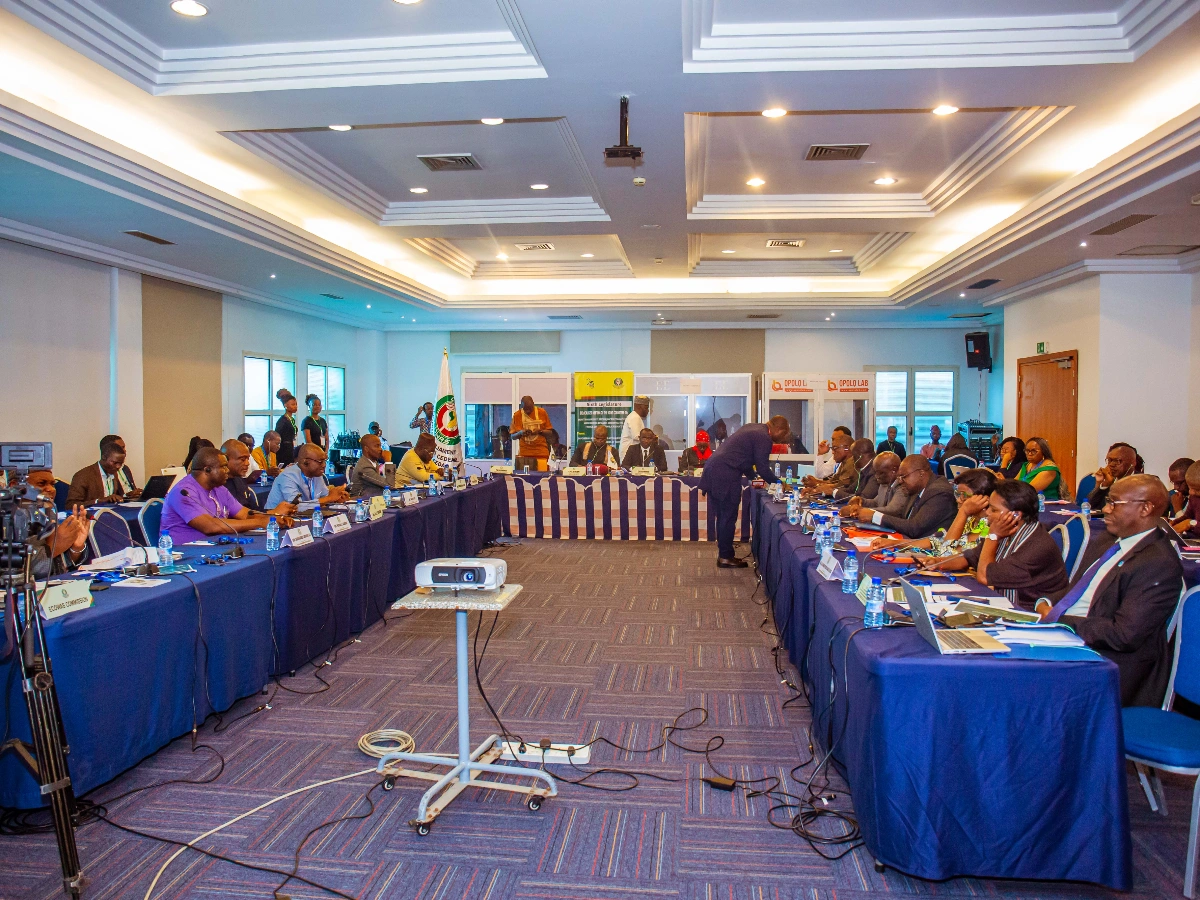
The engagements, held on July 29 and 30, formed part of activities lined up for the ongoing delocalised meeting of the Parliament’s Joint Committee on Industry and Private Sector, Macroeconomic Policy and Economic Research, Administration, Finance and Budget, and Public Accounts in Cotonou.
The lawmakers first visited LES JUS TILLOU, a pineapple juice processing factory, where the founder, Madam Guedegbe Marcos, painted a grim picture of the difficulties businesses face trading within the ECOWAS region.
She told the parliamentarians that despite the bloc’s commitment to the free movement of goods and services, exporting products to neighbouring countries such as Nigeria and Ghana remains more difficult than shipping to Canada and Europe because of bureaucratic bottlenecks and trade restrictions.
According to her, the factory was established with a loan of nearly four billion CFA francs from the ECOWAS Bank for Investment and Development (EBID), but now requires an additional one billion CFA francs to expand production and improve packaging to meet growing market demand.
Marcos said the company’s products enjoy strong demand both within and outside Africa but lamented that numerous barriers to intra-regional trade continue to limit business growth.
She described the ECOWAS principle of free movement of people, goods and services as a vision that is yet to be fully realised on the ground, urging regional leaders to match policy commitments with concrete action.
Responding, members of the ECOWAS Parliament assured the entrepreneur that the concerns raised would be incorporated into their deliberations and discussed with member states to improve the implementation of regional trade protocols.
The lawmakers also toured the Glo-Djigbe Industrial Zone (GDIZ), a major industrial hub developed through a partnership between the Government of Benin and ARISE Integrated Industrial Platforms.
The industrial park, located about 45 kilometres from the Port of Cotonou, hosts manufacturing and processing companies in sectors including textiles, pharmaceuticals, ceramics, electric mobility, cashew and soya processing, reflecting Benin’s industrialisation drive.
At a town hall meeting held at the KP3 market in Cotonou, traders from across the sub-region shared their experiences of harassment, multiple checkpoints, corruption at border posts and inconsistent customs procedures, which they said continue to frustrate cross-border trade.
Women traders also decried the challenges of accessing finance, saying many financial institutions remain reluctant to support female entrepreneurs despite their significant contribution to regional commerce.
Participants called on ECOWAS to harmonise customs charges and border procedures to make trade easier and encourage more businesses to transition from the informal to the formal sector.
After listening to the submissions, the parliamentarians pledged to present the concerns to the relevant authorities and advocate reforms that would eliminate barriers limiting the growth of MSMEs.
The lawmakers maintained that creating an enabling environment for businesses to thrive is essential to reducing poverty, creating jobs and addressing insecurity across West Africa, stressing that obstacles preventing the full implementation of regional trade agreements must be urgently dismantled.