Jane Salihu
The Federal Government has intensified efforts to convert vocational skills into sustainable businesses and employment opportunities, graduating 87,701 Nigerians under the first cohort of its Technical and Vocational Education and Training (TVET) programme while admitting another 150,000 beneficiaries for the second phase.
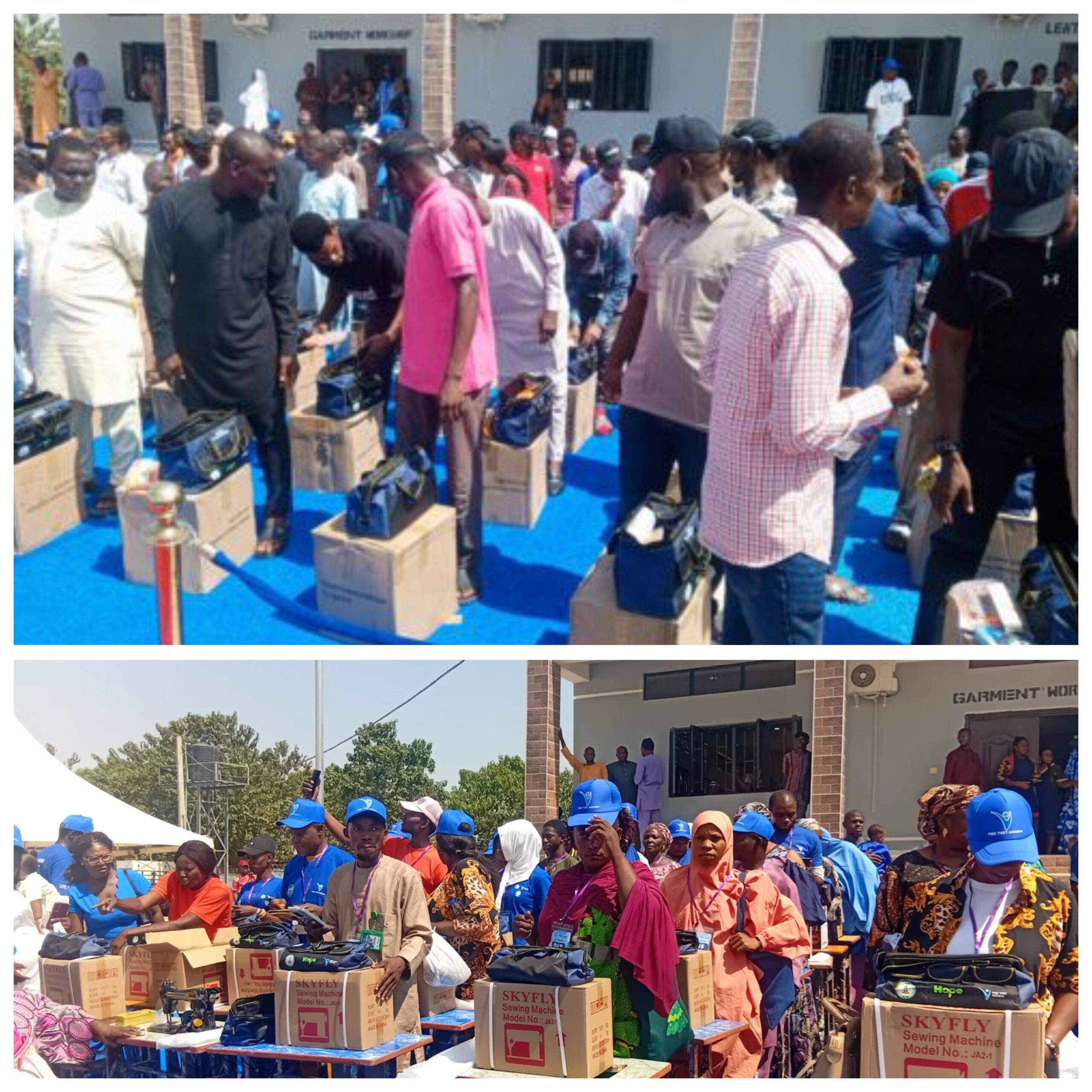
The Minister of Education, Dr Tunji Alausa, disclosed this on Wednesday in Abuja during the graduation ceremony of the first cohort and presentation of starter kits, explaining that the initiative was designed to address the gap between acquiring vocational skills and having the resources to turn them into productive ventures.
He said the programme was structured to ensure that beneficiaries do not leave training centres with certificates alone but also have access to the equipment and support required to establish businesses, secure employment and become economically independent.
According to Alausa, the 150,000 trainees admitted into the second cohort were selected from nearly 1.5 million applications and would receive training across 82 accredited centres nationwide.
The Minister said the first cohort acquired practical skills in several trades, including welding and fabrication, electrical installation, automobile mechanics, solar photovoltaic installation, fashion design, hospitality, information and communication technology, agriculture and beauty therapy.
He disclosed that competency-based assessments and certification were ongoing to ensure graduates obtained nationally recognised qualifications, adding that beneficiaries in trades without designated starter kits, particularly livestock, agricultural technology and animal husbandry, would receive equivalent financial support.
Alausa described the starter kits as an essential part of the programme, noting that access to appropriate equipment would enable beneficiaries to move from training into actual production and service delivery.
He maintained that Nigeria’s economic development required a technically competent workforce capable of meeting industrial and societal demands, stressing that skilled technicians, electricians, artisans and entrepreneurs were essential to improving national productivity.
The Minister said the real measure of the programme’s success would not be the number of people trained but how many graduates eventually secured jobs, established businesses, increased their earnings and created employment opportunities for others.
He urged the beneficiaries to use the equipment responsibly, maintain professional standards, comply with safety regulations and continually improve their knowledge to remain competitive in their respective fields.
Earlier, the Minister of State for Education, Professor Suwaiba Said Ahmad, described the graduation as an important milestone in the Federal Government’s efforts to reposition technical and vocational education and strengthen the relationship between training and industry requirements.
She recalled that the initiative initially attracted doubts over the government’s capacity to pay trainees’ stipends, remunerate service providers and provide starter kits, but said its implementation had demonstrated that the objectives were achievable.
Ahmad explained that the programme was designed around accredited training centres, relevant curricula, practical instruction and industry-aligned skills to prepare beneficiaries for available economic opportunities.
She urged the graduates to see the starter kits as instruments for building sustainable livelihoods, encouraging them to establish businesses, explore employment opportunities and pass on their knowledge by training other young Nigerians.
Also speaking, Chairman of the House of Representatives Committee on Basic Education, Hon. Mark Useni, described technical and vocational education as fundamental to Nigeria’s technological advancement.
He commended the Ministry of Education for aligning its reforms with the development agenda of President Bola Ahmed Tinubu’s administration and urged the beneficiaries to maximise the opportunity to improve their livelihoods and contribute to national development.
One of the beneficiaries, Ms Rashidat Isa, expressed appreciation to the Federal Government, saying the training had equipped her with valuable skills and practical knowledge in fashion design.
Rashifat, who showcased her skills at the ceremony, disclosed that her training had enabled her to learn a great deal about fashion design, including the ability to produce her own outfits, revealing that the dress she wore to the graduation ceremony was her own creation.hi
She said the experience had strengthened her confidence in her abilities, expressing optimism that the starter kit would further enhance her capacity to establish herself in the fashion industry and improve her livelihood..