Jane Salihu
The Nigeria Democratic Congress (NDC) has thrown its weight behind renewed efforts by opposition political parties to build a stronger and more coordinated political alliance ahead of the 2027 general elections.
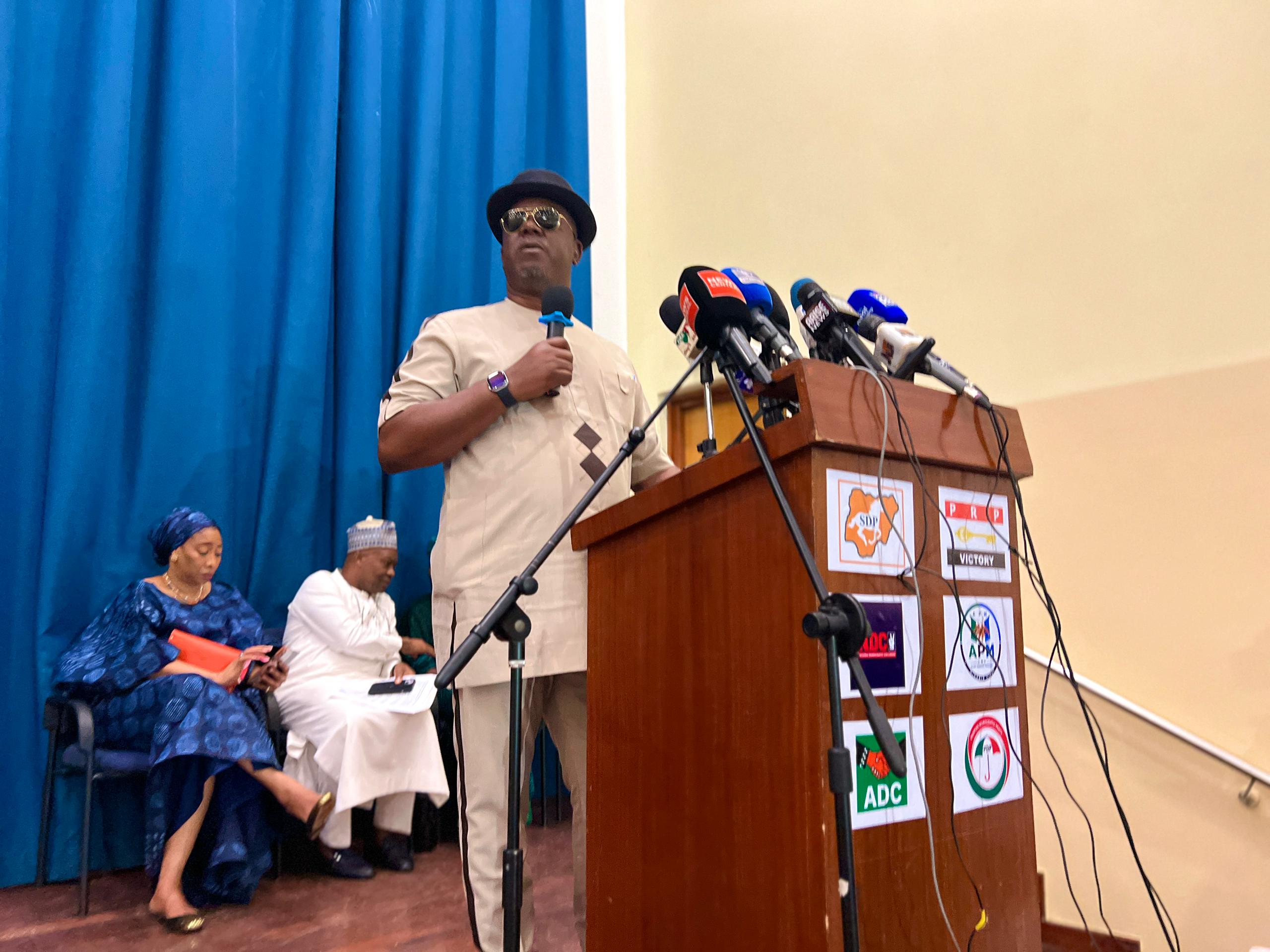
The party was represented at a high-level opposition summit held on Monday at the Shehu Musa Yar’Adua Centre in Abuja, where major opposition groups began discussions on mechanisms for presenting a united challenge to the ruling party.
The NDC delegation was led by the party’s National Chairman, Senator Moses Cleopas, alongside other senior officials of the party.
The summit, convened by the G-100 and supported by the Minority Caucus of the House of Representatives, attracted representatives of the NDC, African Democratic Congress (ADC), Peoples Democratic Party (PDP), Social Democratic Party (SDP), Action Peoples Movement (APM) and Peoples Redemption Party (PRP).
Discussions centred on the growing call for opposition parties to move beyond individual political interests and establish a workable framework for collective action ahead of the 2027 polls.
One of the major proposals was the development of a mechanism for producing a common opposition presidential candidate, with the organisers proposing that the framework be developed within four weeks.
Participants also considered the establishment of standing committees and specialised working groups to drive the coalition process, formulate a transition programme and coordinate consultations among the participating political parties.
For the NDC, its presence at the summit signals its readiness to participate in wider consultations aimed at reshaping opposition politics and providing Nigerians with a credible political alternative in 2027.
The party’s participation also comes amid growing moves by opposition forces to overcome fragmentation and develop a coordinated strategy capable of mounting a serious electoral challenge.
However, organisers of the summit stressed that the discussions were not designed to dissolve or merge existing political parties.
They also clarified that no presidential candidate was asked to withdraw from the 2027 race as a condition for participating in the ongoing consultations.
Rather, the summit was presented as part of a broader process of engagement aimed at identifying areas of common interest and developing a framework that could unite opposition forces without necessarily extinguishing the identities of individual parties.
With the proposed four-week timeline for developing the common-candidate framework, attention is now expected to shift to the committees and working groups charged with translating the summit’s resolutions into a concrete political strategy.
The Abuja meeting therefore marks another significant step in the evolving opposition realignment, as political parties intensify consultations over how best to confront the ruling party and reshape the political landscape ahead of the 2027 general elections.