
ΧJane Salihu
The Universal Basic Education Commission (UBEC) has identified Delta State’s technology-based teacher attendance tracking system, Attend360, as a model that could help states across Nigeria tackle teacher absenteeism and strengthen accountability in basic education.
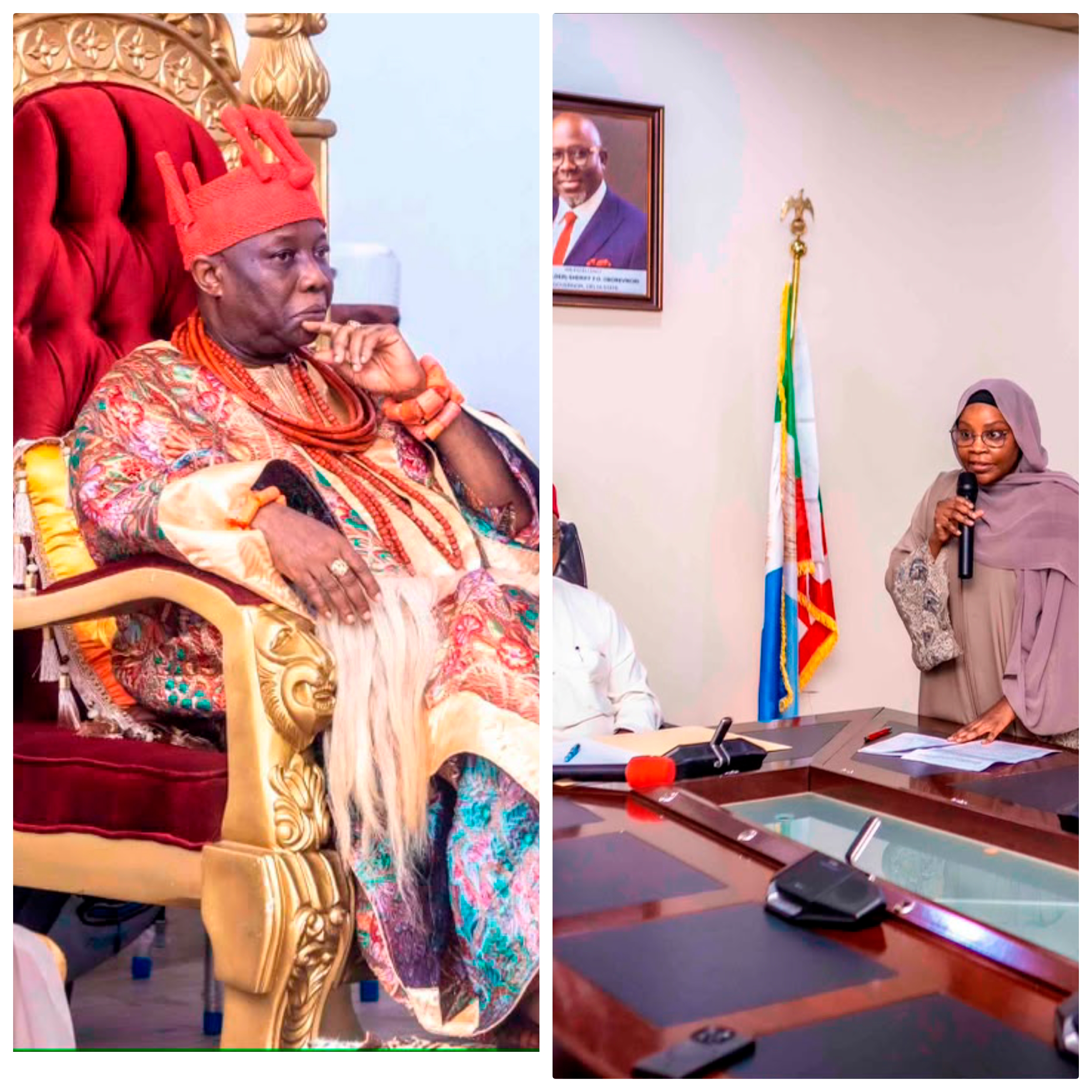
UBEC Executive Secretary, Aisha Garba, made the assessment during a courtesy visit to the Delta State Government, represented by Deputy Governor Sir Monday Onyeme, in Asaba as part of activities marking the 30th Quarterly Meeting of UBEC Management with Chairmen of State Universal Basic Education Boards (SUBEBs).
Garba said the Attend360 platform demonstrates how technology can be deployed to monitor teachers’ presence in schools and improve accountability, stressing that the availability of qualified teachers in classrooms remains fundamental to achieving meaningful learning outcomes.
“There is no education or quality learning without a good teacher or without a teacher in the classroom. You can build as many schools as you want, but as long as there is no teacher, and a good teacher, in the classroom, learning will not take place,” she said.
She explained that Delta was chosen to host the quarterly meeting because of developments recorded in the state’s basic education sector, particularly its deployment of technology to improve school management, teacher attendance and accountability.
The meeting, themed “Repositioning Basic Education in Nigeria to Optimise Investment and Impact,” brought together UBEC management and SUBEB chairmen from across the country to examine ways of converting government investments, innovation and education policies into measurable improvements in schools.
The UBEC boss also commended Delta State for its record in accessing the Universal Basic Education (UBE) matching grants, noting that the state had accessed its matching grant up to 2025.
She, however, challenged the state to ensure that funds accessed through UBEC are fully utilised and that approved programmes are implemented without unnecessary delays.
According to her, increased financial investment in education would have little impact if resources did not translate into improved school infrastructure, effective teaching and better learning outcomes for pupils.
Garba further urged Delta to position itself to benefit from the education component of the HOPE Education Programme, a World Bank-supported intervention with up to $500 million earmarked for education.
She said states seeking to participate in the programme would be required to access the 2026 matching grant and implement at least 50 per cent of their 2025 Action Plan.
The Executive Secretary therefore encouraged Delta to sustain its investment in basic education, maximise available resources and utilise UBEC’s technical support to improve its performance.
Responding, Deputy Governor Onyeme assured the Commission that the Delta State Government would continue to prioritise education and expand access to quality learning opportunities.
Onyeme clarified that the state’s unutilised UBEC funds stood at about ₦1 billion, rather than the ₦8 billion earlier referenced.
He disclosed that Delta had also implemented about 90 per cent of its 2025 Action Plan and had already received its 2026 matching grant.
Describing education as one of the state government’s major areas of investment, the Deputy Governor said Delta would continue to improve its performance and ensure that more citizens have access to quality education.
“We will continue to improve and do our best to ensure that we give education to as many citizens as possible,” he said.
The UBEC delegation also paid a courtesy visit to the Asagba of Asaba, HRM Prof. Epiphany Azinge, where Garba called for greater involvement of traditional institutions and other stakeholders in strengthening basic education.
She said the Commission’s overarching objective was to ensure that every Nigerian child, irrespective of location, family background or circumstance, has access to quality basic education.
“Our goal is to ensure that every Nigerian child, regardless of their circumstances or where they live, whether they come from a poor family or a rich family, must have the opportunity to receive quality basic education,” she said.
Garba acknowledged the Asagba’s support for education initiatives in Delta, including efforts linked to smart schools, and advocated stronger collaboration between traditional institutions, governments and education agencies.
The Asagba, Prof. Azinge, described basic education as the foundation upon which Nigeria’s future is built, stressing that the quality of children produced by the system would depend largely on the quality of teachers available at the foundational level.
“If you have quality teachers, you produce quality people,” he said.
He called on UBEC and SUBEB chairmen to confront the challenges affecting basic education and develop practical solutions, while stressing that children with disabilities and those from disadvantaged backgrounds must not be excluded.
Garba, reflecting on the engagements, said the real test of education investment was whether government interventions and innovations ultimately produced visible improvements in classrooms and learning outcomes.
She assured that UBEC would continue to collaborate with state governments, traditional institutions and other stakeholders by providing technical support and guidance aimed at strengthening basic education across the country