…Seeks media partnership to restore dignity of teaching
Jane Salihu
The Executive Secretary of the National Commission for Colleges of Education (NCCE), Dr. Angela Ajala, has raised concerns over a looming teacher shortage in Nigeria, warning that the country could face a serious education crisis within the next six years if urgent steps are not taken to attract more candidates into teacher-training institutions.
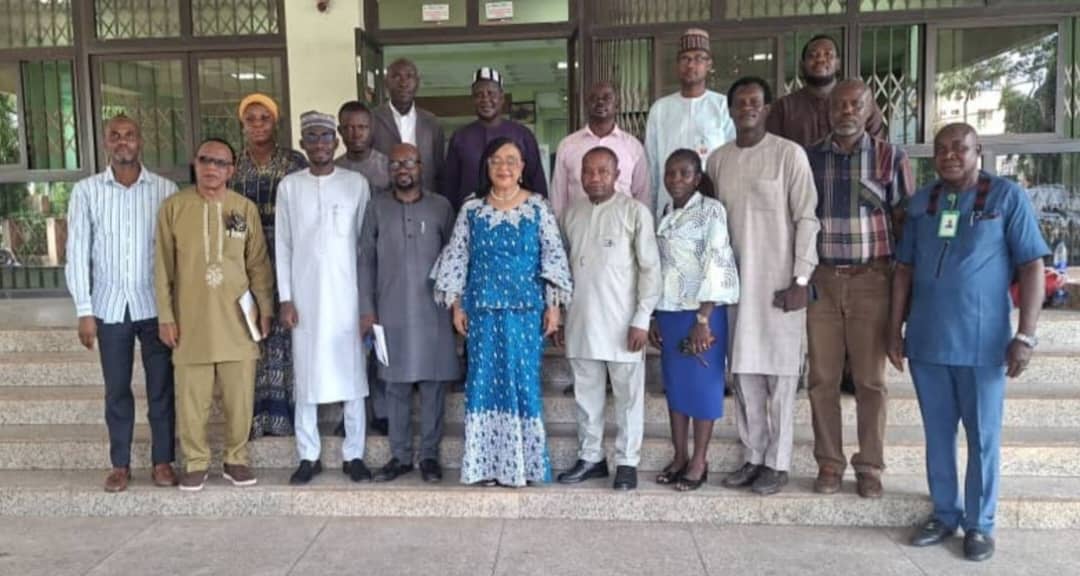
Speaking during a courtesy visit by members of the Education Correspondents Association of Nigeria (ECAN) in Abuja on Tuesday, Ajala said the nation’s teacher education system had suffered decades of neglect and negative perception, resulting in declining enrolment in Colleges of Education and diminishing respect for the profession.
According to her, the situation has prompted a series of reforms aimed at revitalising teacher education and repositioning teaching as a prestigious and rewarding career path.
She noted that current enrolment figures in many Colleges of Education are alarmingly low, with some institutions recording only a handful of students across several academic programmes.
“If the current trend continues, Nigeria may not have enough qualified teachers to meet future demands. The attrition rate is high, enrolment is low, and urgent intervention is needed to reverse the situation,” she said.
Ajala stressed that teachers remain the foundation of national development, arguing that every professional, regardless of field, is shaped by the quality of education received from teachers.
She lamented what she described as the erosion of societal respect for teachers, recalling a period when educators were highly regarded within communities.
“Over the years, teaching has wrongly been portrayed as a profession for those who have no other options. That narrative has done enormous damage to the education sector and must be corrected,” she stated.
The NCCE boss called on the media to support efforts aimed at changing public perception of teaching, describing journalists as key stakeholders in the ongoing reform process.
“You are not merely observers; you are partners in shaping public understanding. The stories you tell influence attitudes, policies and decisions. We need sustained advocacy for teacher education,” she told the ECAN delegation led by its Chairman, Mr. Chuks Ukwuatu.
Ajala also defended the Federal Government’s decision to remove the Unified Tertiary Matriculation Examination (UTME) requirement for admission into Colleges of Education, insisting that the policy was informed by data and projections rather than a lowering of academic standards.
She explained that UTME serves primarily as a placement examination and should not be viewed as the sole determinant of a candidate’s academic potential.
As part of broader reforms, Ajala disclosed that the Commission is implementing the dual-mandate policy in Colleges of Education, which will enable institutions to award both the Nigeria Certificate in Education (NCE) and bachelor’s degrees.
She added that graduates would also have opportunities to acquire globally recognised skills certifications designed to enhance their competitiveness in the international labour market.
According to her, the Commission is equally reviewing teacher education curricula nationwide to align them with emerging global trends and best practices.
While acknowledging the successes of countries such as Finland and Singapore in teacher development, Ajala maintained that Nigeria’s curriculum framework compares favourably with international standards, noting that effective implementation remains the critical challenge.
Earlier, ECAN Chairman, Mr. Chuks Ukwuatu, congratulated Ajala on her appointment as the first female Executive Secretary of the NCCE, describing her emergence as a significant milestone for the Commission.
He reaffirmed the association’s commitment to balanced and constructive reporting of education policies and programmes, while also informing the NCCE leadership about ECAN’s forthcoming Education Conference and Awards, which will assess reforms and policy initiatives within the sector.
Both parties pledged to strengthen collaboration in promoting public awareness of teacher education reforms and advancing efforts to improve the quality of education in Nigeria.