Jane Salihu
The Police Officers’ Wives Association (POWA) has called for the inclusion of professional counselling and mental health services in police welfare programmes, warning that the psychological impact of policing extends beyond officers to their spouses and children.
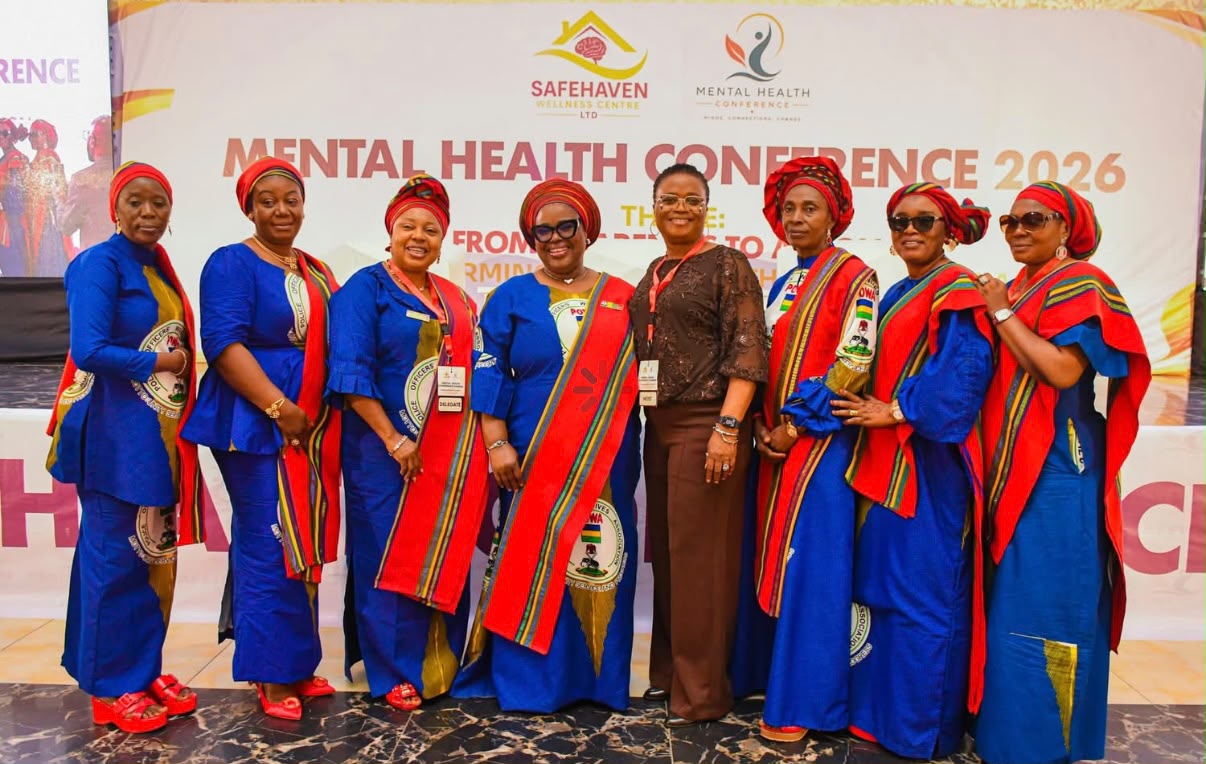
The National President of POWA, Chief Mrs Olufunmilola Mutiat Disu, made the call at the Mental Health Conference Nigeria 2026, organised by Safehaven Wellness Centre, where she highlighted the often-overlooked emotional burden families bear when police personnel return home from traumatic experiences.
Speaking at the conference themed, “From Awareness to Action: Transforming Mental Health Care in Nigeria,” Disu observed that police officers are routinely exposed to violence, loss, uncertainty and life-threatening situations, which can affect their emotional wellbeing and relationships at home.
She explained that while officers may return physically from demanding operations, the psychological effects of their experiences often remain, leaving family members struggling to understand changes in their behaviour.
“Sometimes, an officer returns home physically present but emotionally absent. The day’s trauma follows them home, leaving families struggling to understand what has changed and how to help,” she said.
The POWA president argued that police welfare should not be measured solely by salaries, financial assistance and material provisions but should also address the mental and emotional health of personnel and their families.
She advocated accessible counselling services, supportive workplace policies and institutional arrangements that would enable officers and their relatives to seek professional mental health assistance without fear of discrimination or stigmatisation.
Disu further noted that officers who receive adequate psychological support, alongside their families, are better equipped to manage the pressures of policing, maintain healthy relationships and discharge their responsibilities effectively.
She also called for a change in societal attitudes towards mental health, stressing that fear of being judged often prevents individuals from speaking about their emotional struggles or seeking timely intervention.
According to her, mental health challenges cut across age groups and social backgrounds, affecting young people facing uncertainty as well as parents dealing with personal and economic pressures.
She maintained that access to mental healthcare should be based on need rather than the severity of an individual’s condition, insisting that people should not wait until they experience a breakdown before seeking assistance.
“You do not have to break before you deserve help, and you do not have to suffer in silence to prove your strength. Seeking help is not surrender; it is courage,” she stated.
Disu urged government institutions, communities and other stakeholders to move beyond public awareness campaigns by establishing practical support systems that make mental healthcare accessible and affordable.
Reaffirming POWA’s commitment to the welfare of police personnel and their families, she said sustained investment in mental health services would strengthen family relationships, improve officers’ wellbeing and contribute to a more effective police institution.
She added that addressing the psychological consequences of policing was not only a responsibility towards officers and their families but also an investment in the wellbeing of society at large.