By Jane Salihu
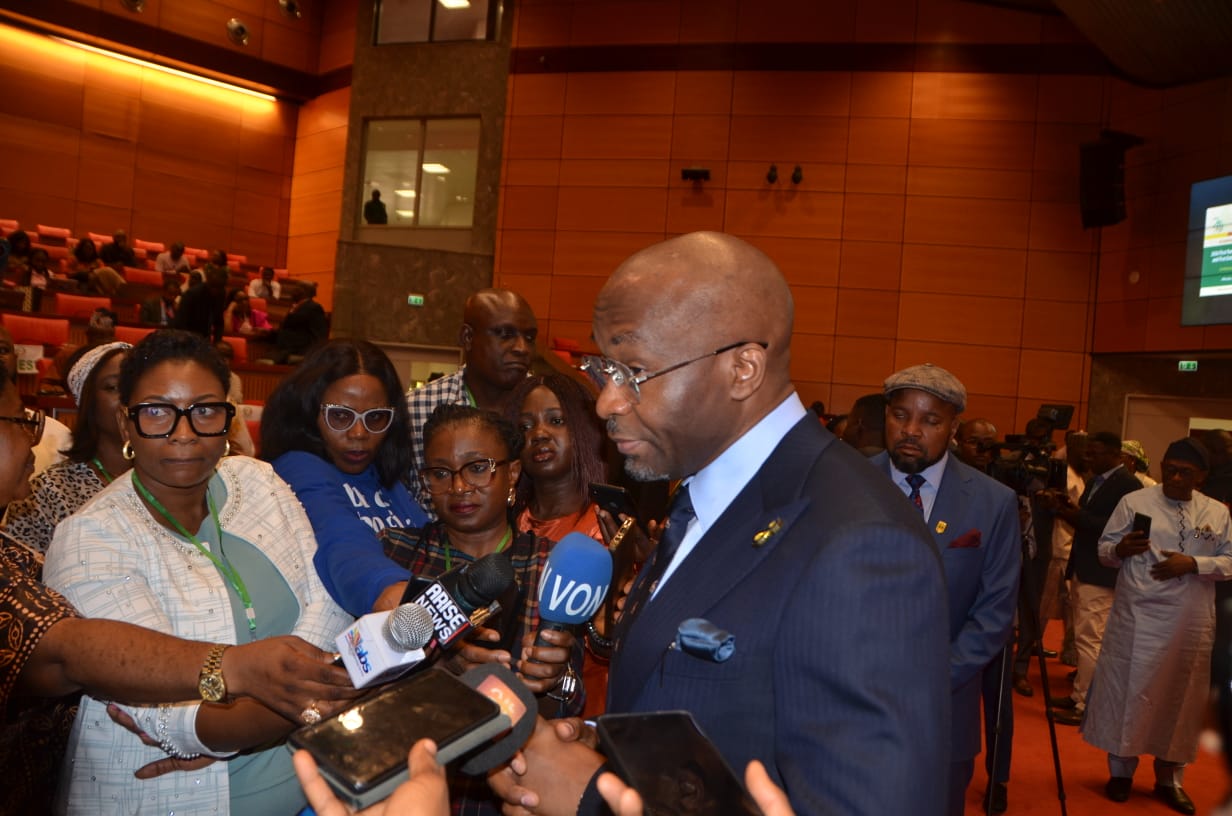
Chairman of the House of Representatives Committee on Commerce, Hon. Ahmad Munir, has declared that the 10th House of Representatives is committed to ensuring that Nigeria’s commercial laws drive economic expansion rather than hinder it, as the National Assembly commenced a public hearing on 13 strategic commerce-related bills.
Speaking at the opening of the public hearing on Monday at the National Assembly, Abuja, Munir described the exercise as a critical stage in the legislative process, saying public hearings remain a vital bridge between the legislature and the people by allowing citizens and stakeholders to contribute to laws that shape the nation’s economic future.
He said the bills before the committee are designed to modernise Nigeria’s commercial framework, strengthen professional standards and position the country’s economy for sustainable growth in an increasingly competitive global market.
According to the committee chairman, the proposed legislations are grouped into three major areas: expanding global trade and protecting local assets, modernising commerce through the digital economy, and strengthening professional standards and institutional capacity.
Munir explained that under the trade category, the committee is considering the African Continental Free Trade Area (AfCFTA) Implementation Bill, which seeks to establish the legislative framework for Nigeria to fully maximise opportunities under the continental free trade agreement.
He added that amendments to the Nigerian Export Promotion Council (NEPC) Act would protect Nigeria’s unique products through Geographical Indications while updating obsolete statutory references to ensure greater legal clarity and institutional alignment.

On commerce and digital innovation, the committee is considering the Mainstreaming the Digital Economy Bill to integrate digital growth strategies into trade, investment and industry, the Sale of Goods Act Amendment Bill to update Nigeria’s commercial laws in line with e-commerce and digital payment systems, as well as amendments to the Price Control Act to reflect current economic realities while protecting consumers.
Munir further disclosed that several bills are aimed at strengthening professional regulation through the establishment and enhancement of institutes covering human resource management, business development, counselling, risk management, sustainability and applied information management.
“Our goal in the 10th House of Representatives is to ensure our laws actively foster economic expansion rather than obstruct it,” he said.
The lawmaker urged stakeholders from government institutions, the private sector, professional bodies and civil society organisations to actively participate in the legislative process by providing constructive, evidence-based recommendations that would strengthen the proposed laws.
He stressed that the success of the legislative exercise depends largely on expert contributions capable of transforming the bills into robust legal instruments that will improve Nigeria’s business environment and attract investment.
Declaring the public hearing open, Speaker of the House of Representatives, Rt. Hon. Abbas Tajudeen, reaffirmed the commitment of the National Assembly to supporting the Federal Government’s economic reform programme through legislation that advances President Bola Ahmed Tinubu’s Renewed Hope Agenda.

Represented at the event, the Speaker said the House would continue to enact laws that improve the ease of doing business, encourage entrepreneurship, remove unnecessary regulatory barriers, attract investment and create opportunities for Nigerians.
He noted that the public hearing demonstrates the House’s commitment to transparent, inclusive and participatory lawmaking, stressing that commerce remains a major driver of investment, innovation, market expansion and job creation.
Also speaking, the Minister of Industry, Trade and Investment, Dr. Jumoke Oduwole, commended the House Committee on Commerce for initiating legislation to domesticate the African Continental Free Trade Area (AfCFTA), describing it as a significant step towards strengthening Nigeria’s participation in continental trade.

She said AfCFTA provides Nigeria with access to a market of more than 1.4 billion people with a combined Gross Domestic Product of over US$3 trillion, creating opportunities for businesses to expand, attract investment, create jobs and strengthen regional value chains.
Oduwole noted that Nigeria has made significant progress since ratifying the agreement in 2020 through the establishment of implementation structures, development of a national strategy, submission of tariff concessions and service commitments, as well as initiatives to simplify trade processes for businesses.
She added that Nigeria became the first State Party to ratify the AfCFTA Digital Trade Protocol and has continued to champion digital commerce initiatives while supporting Micro, Small and Medium Enterprises (MSMEs), particularly women- and youth-led businesses, to compete in continental markets.
The minister said the proposed AfCFTA Implementation Bill would provide a coordinated legal framework for implementation, enhance investor confidence, strengthen institutional collaboration and support the Renewed Hope Agenda through economic diversification, industrialisation, export promotion and job creation.
Stakeholders from ministries, government agencies, the organised private sector, professional bodies and development partners attended the hearing and are expected to submit memoranda that will guide the eventual passage of the bills.