Jane Salihu
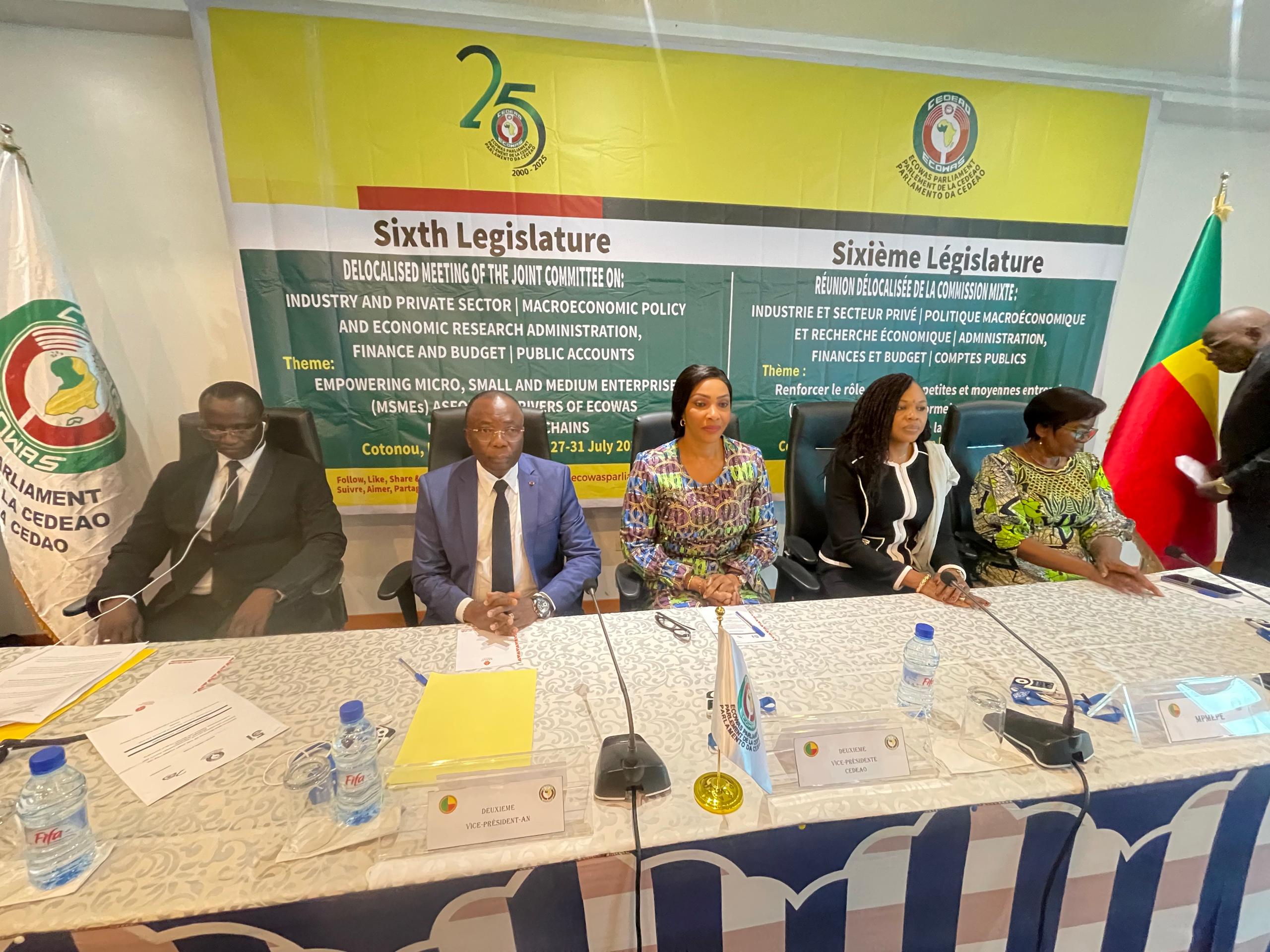
The Parliament of the Economic Community of West African States (ECOWAS) has begun a five-day high-level meeting in Cotonou, Republic of Benin, aimed at developing practical strategies to position Micro, Small and Medium Enterprises (MSMEs) as key drivers of regional trade, industrial growth and economic integration across West Africa.
The delocalized meeting, which commenced on Monday, brings together lawmakers, government officials, financial institutions, private sector stakeholders and development experts under the Joint Committee on Industry and Private Sector, Macroeconomic Policy and Economic Research, Administration, Finance and Budget, and Public Accounts.
With the theme, “Empowering MSMEs as Formal Drivers of ECOWAS Regional Value Chains,” the gathering seeks to address longstanding challenges limiting the growth of small businesses, including access to finance, regulatory bottlenecks, digital transformation, product standardisation and cross-border trade.
The meeting comes at a critical time when countries across the globe are strengthening their domestic industries to withstand economic uncertainties, making the formalisation and competitiveness of MSMEs a strategic priority for sustainable development in the ECOWAS region.
Proceedings opened with goodwill messages from key government and parliamentary leaders, including the Head of the Benin Delegation to the ECOWAS Parliament, the Chairman of the Joint Committee, ministers from the Republic of Benin responsible for Foreign Affairs, Economy and Finance, Higher Education, Small and Medium Enterprises, Employment Promotion, Interior and Public Security, as well as the Speakers of both the Benin Parliament and the ECOWAS Parliament.
Following the opening ceremony, delegates moved into technical sessions focusing on policy frameworks designed to strengthen regional value chains.
The first presentation examined the implementation of the West Africa Competitiveness Programme (WACOMP), the ECOWAS Business Council and ECOSHAM as tools for formalising MSMEs and integrating them into regional markets.
Another session highlighted the role of industrial clusters and supporting infrastructure in enhancing the participation of MSMEs in regional production networks, while the day’s final presentation explored trade facilitation, regulatory reforms and business formalisation, delivered by former Acting Director of Industry and Private Sector at the ECOWAS Commission, Dr. Tony Elumelu.
On the second day, discussions will shift to financing and innovation, with experts examining digital solutions, sustainable business practices, export readiness, regional payment systems and quality standards required for businesses to compete across borders.
The programme also features a panel discussion bringing together representatives of the ECOWAS Bank for Investment and Development (EBID), policy experts and international trade specialists to explore practical approaches to improving MSMEs’ access to regional markets.
A major highlight of the meeting will be the parliamentary field visit scheduled for the third day, during which lawmakers will interact directly with MSMEs to assess investment opportunities, labour mobility, utilisation of the ECOWAS Trade Liberalisation Scheme (ETLS), product standardisation and digital transformation challenges facing businesses.
The fourth day will feature a town hall meeting with private sector operators and business leaders under the theme, “Building Practical Pathways for MSMEs and Businesses to Participate in the Formal ECOWAS Regional Value Chain.”
The interactive session will focus on removing barriers to formalisation, improving access to finance, promoting export readiness, simplifying customs procedures, expanding digital payment systems and addressing the concerns of women-led, youth-led and informal businesses seeking regional market opportunities.
The five-day engagement will conclude with the consideration and adoption of the committee’s report, which is expected to contain recommendations to strengthen policies that promote MSME development and deepen regional economic integration across the ECOWAS sub-region.
Stakeholders expressed optimism that the outcomes of the meeting will provide a roadmap for creating a more competitive and resilient private sector capable of accelerating industrialisation, boosting intra-regional trade and creating sustainable employment opportunities throughout West Africa.