Jane Salihu
The Federal Government has moved to strengthen Nigeria’s higher education admission and accreditation systems, following concerns raised by student leaders over candidates being admitted into programmes that lack the required approval or institutional capacity.
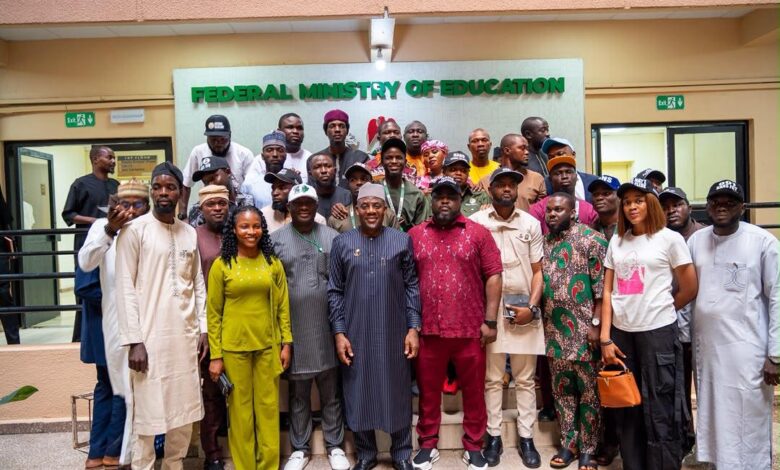
Minister of Education, Dr Maruf Olatunji Alausa, disclosed this when he received representatives of the National Association of Nigerian Students (NANS), who raised concerns over challenges confronting students across some tertiary institutions.
The NANS leadership called for stronger regulatory measures to prevent institutions from admitting students into programmes that are either unapproved or lack the capacity to sustain them through graduation.
The students also urged the Federal Government to address issues affecting the welfare and academic progression of Nigerian students, assuring that student leaders were willing to work with government in finding lasting solutions.
Responding, Alausa said the concerns presented by the students had received the attention of the Ministry of Education, assuring that matters capable of jeopardising students’ academic future would not be handled with levity.
The minister said the government was working to resolve funding challenges affecting the Federal Scholarship Awards, strengthen admission procedures and conduct a comprehensive review of the nation’s accreditation system.
He explained that the measures were designed to ensure that students were not admitted into programmes without the necessary approvals only to discover years later that their qualifications could be affected.
Alausa further said relevant government agencies and other stakeholders were being mobilised to implement corrective measures without unnecessary delay.
He assured the student leadership that the ministry would sustain an open channel of communication with NANS and remain responsive to issues affecting challenges affecting students in some institutions.
The NANS president called for stronger regulatory action to protect students from institutions that admit candidates into programmes without the required approval or capacity.
He said student leaders were ready to collaborate with the government in addressing the challenges.
Responding, Alausa said the concerns raised by the student leaders were receiving the full attention of the Ministry of Education.
He assured them that issues capable of disrupting the education and future of Nigerian students would not be treated with levity.
The minister said the ministry was working to resolve funding challenges affecting the Federal Scholarship Awards, strengthen admission processes and undertake a comprehensive review of the accreditation system.
According to him, the measures are aimed at ensuring that students are not admitted into unapproved programmes or left stranded after years of study.
He added that relevant agencies and stakeholders were being mobilised to implement the necessary corrective measures without unnecessary delay.
Alausa assured the students that the ministry would maintain an open channel of engagement with their leadership and continue to address issues affecting their education and welfare.
He said the Federal Government would remain focused on advancing President Tinubu’s Renewed Hope Agenda in education, stressing that reforms, investment and opportunities for young Nigerians must be sustained.
The minister maintained that the administration’s goal was to ensure that young Nigerians acquire quality education, develop relevant skills, create jobs and contribute meaningfully to national development.
Spread the love’ education, welfare and academic progression.
The minister said the Federal Government remained committed to advancing President Bola Ahmed Tinubu’s Renewed Hope Agenda in the education sector through reforms, increased investment and expanded opportunities for young Nigerians.
According to him, the ultimate objective of the administration is to ensure that Nigerian youths receive quality education, acquire relevant skills, become economically productive and contribute meaningfully to national development.
The engagement underscores the government’s renewed focus on closing regulatory gaps in the tertiary education system and protecting students from spending years pursuing programmes whose approvals or accreditation status may later become a source of uncertainty.