Jane Salihu
The Universal Basic Education Commission (UBEC) has called for stronger investment in alternative education pathways for girls and young mothers who are forced to discontinue their schooling, declaring that dropping out must never become a permanent barrier to education, skills and economic independence.
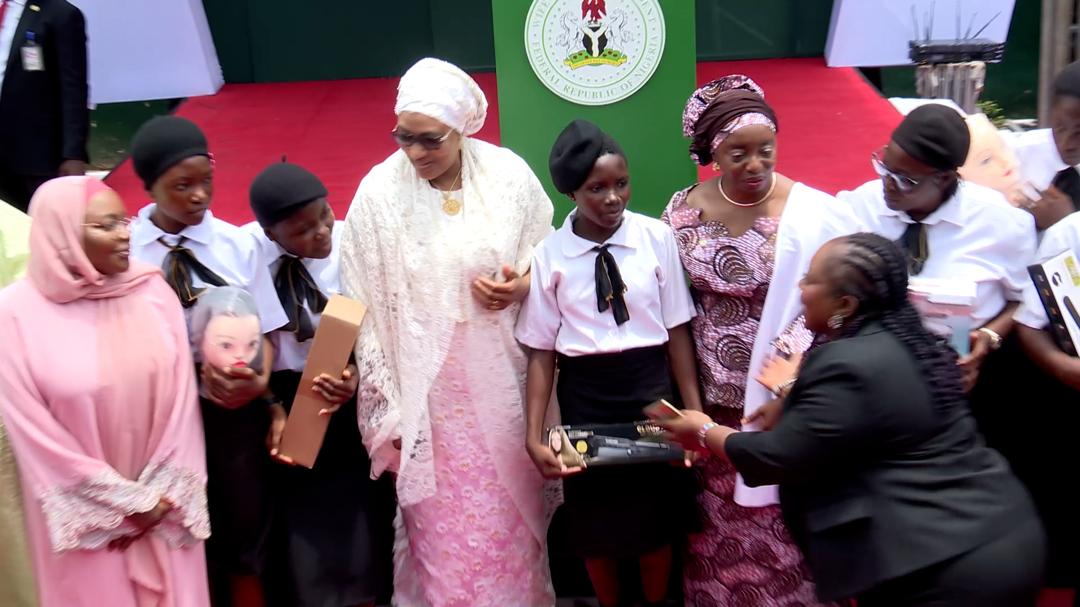
The Executive Secretary of UBEC, Dr. Aisha Garba, made the call in a statement issued by Ikharo Attah, Special Adviser (Media and Communications), following the commissioning of the rehabilitated Alternative High School for Girls in Agboju, Amuwo-Odofin Local Government Area of Lagos State.
Garba said girls whose education is interrupted by early pregnancy, poverty or other socio-economic circumstances should be given a second chance to return to school rather than being treated as lost causes.
“A girl who drops out of school should not be regarded as a lost cause. A young mother who wants to return to school should not be told that her time has passed,” she said.
According to her, the rehabilitated school represents more than a refurbished learning facility, describing it as a second-chance pathway through which girls and young women can complete their education, acquire vocational skills and rebuild their prospects.
She stressed that a girl’s circumstances should not determine her access to quality education or limit her future opportunities.
Garba traced the vision behind the Alternative High School to 2007, during the tenure of Senator Oluremi Tinubu as First Lady of Lagos State, and commended her sustained advocacy for girls’ education and empowerment.
She said the initiative aligns with the education and human capital development priorities of President Bola Ahmed Tinubu’s Renewed Hope Agenda, particularly efforts to ensure that vulnerable groups are not excluded from opportunities for learning and development.
The UBEC boss also commended Hajiya Nana Shettima, who represented the First Lady at the commissioning, for her commitment to education and vulnerable children, as well as the Lagos State First Lady, Dr. Ibijoke Sanwo-Olu, for supporting educational and mentorship initiatives aimed at developing young people’s academic abilities, character and life skills.
The rehabilitated school comprises two blocks with more than 26 classrooms and facilities for Agriculture, Physics and Biology, alongside vocational training areas for cosmetology, garment-making, hairdressing, catering and home economics.
It also has a library and ICT facilities designed to combine conventional academic learning with practical and digital skills.
Garba disclosed that rehabilitation work was ongoing on another Alternative High School for Girls in Ikorodu, Lagos State, indicating that UBEC was seeking to expand alternative education opportunities for girls and young women whose schooling had been disrupted.
Representing the First Lady, Hajiya Nana Shettima described the education of the girl child as critical to nation-building and commended UBEC for rehabilitating and equipping the school.
She recalled that the institution was established to provide girls affected by early pregnancy and socio-economic difficulties with an opportunity to return to school, complete their secondary education and acquire vocational skills.
She urged the students to remain focused and resilient, assuring them that their past experiences should not determine their future.
Also speaking on behalf of the Lagos State Governor, Dr. Ibijoke Sanwo-Olu described the project as the restoration of opportunity and dignity for young women whose education had been interrupted.
She noted that educating a girl produces benefits beyond the individual, strengthening families, communities and the wider society.
The intervention underscores the growing importance of alternative education as a route back into the learning system for girls and young women who are unable to continue through conventional schooling.
With academic, ICT and vocational facilities available at the rehabilitated school, beneficiaries are expected to combine secondary education with practical skills that could improve their future livelihood opportunities.
Garba said UBEC would continue to work with state governments and other stakeholders to expand alternative education, improve learning environments and strengthen skills acquisition programmes for girls and young women across the country.
She maintained that every child, regardless of the circumstances that interrupted their education, deserves another opportunity to learn, develop relevant skills and fulfil their potential.